
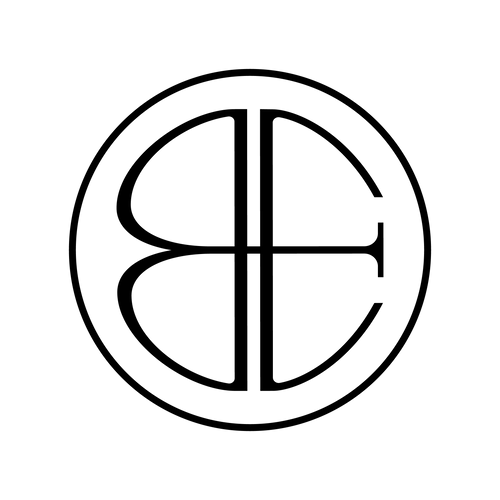


The symbols you may recognize throughout our store and site actually hold so much meaning. The BE stamp, the Window, the X, the Knot, the Triangle and the Laurel leaves are the creative pillars that hold together the essence of Broken English. Laura, BE’s Founder, breaks down the significance behind each one and the jewelry that speaks to each theme most.
The symbols you may recognize throughout our store and site actually hold so much meaning. The BE stamp, the Window, the X, the Knot, the Triangle and the Laurel leaves are the creative pillars that hold together the essence of Broken English. Laura, BE’s Founder, breaks down the significance behind each one and the jewelry that speaks to each theme most.

How do you use jewelry to communicate?
To me, jewelry is what is meant and not said. It can hold a memory, mark a relationship, celebrate a transformation, or express an intention for the future. Sometimes that meaning is immediately recognizable and sometimes it remains entirely private between the piece and the person wearing it.
When I choose jewelry for myself, I think about what I want to carry with me. When I curate for someone else, I listen for the story beneath what they are asking for. Often, they are not simply looking for an object; they are looking for a way to honor a person, a moment, or a part of themselves.
The monetary value of a piece is secondary to its emotional value. A modest charm can carry as much weight as an extraordinary gemstone. Worn alone, a piece can feel like a single word or declaration. Layered with other pieces, it becomes a sentence, an evolving record of where someone has been and what they are becoming.
Broken English exists in that space between feeling and language. Jewelry gives form to the things we cannot always articulate.
Describe your process in developing this vocabulary for Broken English.
Since our start in 2006, this has always been our DNA. The reason why I chose the name Broken English was to represent what is meant and not said and that jewelry tells the story of the person wearing it. It’s a collection of moments and milestones. The process began with the idea of historic jewelry hallmarks. A piece might carry several small stamps that identify its maker, material, origin, or history. I loved the idea that these tiny marks could hold so much information, and I began thinking about how Broken English could create its own system of marks.
We knew we needed the B.E Stamp as the anchor, our signature and mark of origin but I wanted the other symbols to carry emotional meaning. I began with the ideas that continually appear in jewelry and in people’s lives: identity, remembrance, intention, love, protection, freedom, and resilience.
Those ideas became the Window, the X, the Knot, the Triangle, and the Laurel Leaves. Art was an important point of departure. We looked at biomorphic forms, Matisse’s leaves, Ellsworth Kelly’s shapes, Frank Stella’s interlocking geometry, and Yoko Ono’s imagined window. But the references were starting points rather than final answers. The goal was to reduce each idea to its clearest and most elemental form.
Each symbol had to be strong enough to stand on its own but open enough for another person to bring their own meaning to it. Together, the icons function like a vocabulary. Each is a word, and the way they are combined creates a sentence. That is the foundation of Broken English as a language unto itself.
How have these pillars acted as a North Star?
The pillars give me a filter rather than a formula.
Fashion changes constantly, and I think it is important to remain curious and aware of what is happening. But a trend alone is never enough. I return to a few questions: Does this piece have emotional intelligence? Does it invite a personal connection? Can it become more meaningful with time? Will someone live in it rather than simply wear it for a season?
The symbols bring me back to the values at the center of Broken English: memory, intention, connection, strength, and freedom. Those ideas are timeless, even when the aesthetic expression around them changes.
They also allow the curation to remain eclectic. Broken English can place something antique beside something contemporary, something restrained beside something eccentric, because the connection is not based on trend. It is based on meaning. The pillars remind me that we are not simply collecting beautiful objects; we are choosing pieces that have the potential to become part of someone’s history.

What symbol is most meaningful to you now? Was there another at the beginning?
At this moment, I feel most connected to the Window.
A window is about remembrance, but it is also about possibility. It allows us to look back without asking us to remain there. It frames a particular view, just as memory preserves fragments of experience, but it also reminds us that there is always something beyond the frame.
I love that the window in Yoko Ono’s poem does not physically exist, it has to be imagined and drawn. That feels especially meaningful to me now. Even when an opening is not given to us, we can create one through memory, imagination, or hope. The window asks, “What do we remember, and where are we looking next?”
At the beginning of Broken English, I think I was more connected to the B.E Stamp. The stamp was about establishing an identity and putting our mark into the world. It gave the language an author and a point of origin. The Stamp says, “This is who we are”.
Can you match a current piece from the store to each pillar?
The B.E Stamp: Oval Diamond Signet Ring by Lizzie Mandler. A signet is historically connected to identity, authorship, and the personal seal. This ring feels like a contemporary expression of leaving your mark.
The Window: Enamel Lunar Crescent Moon Locket by Loquet. A locket is a private chamber for remembrance—something intimate can be held inside and carried close to the body. The moon motif also connects beautifully to the moonlight remembered through Ono’s imagined window.
The X: Rose Cut Diamond Criss Cross Narrow Band by Munuu the Gem Palace. Its intersecting lines create a visible point of convergence. It represents paths meeting, a choice being made, and intention becoming action—the essential energy of manifestation.
The Knot: The Regular Legacy Knot Bangle by Engelbert. The continuous gold form embodies connection, devotion, and endurance. It feels substantial but organic, reflecting the idea that the strongest bonds can still have movement and complexity.
The Triangle: Organic Triangle Brilliant Ring by Wwake. The triangular diamond has clarity and strength, while the delicate setting gives it balance. It captures the relationship between structure and vulnerability that makes the Triangle meaningful to us.
The Laurel Leaves: Emerald Olive Leaf Peppercorn Beaded Necklace by Pippa Small. The organic leaf motif speaks directly to freedom, wisdom, growth, and resilience. The emerald adds a sense of renewal, making the piece feel less like a traditional victory emblem and more like a living symbol of endurance.


